Appliance leaks
Water heater and appliance leaks
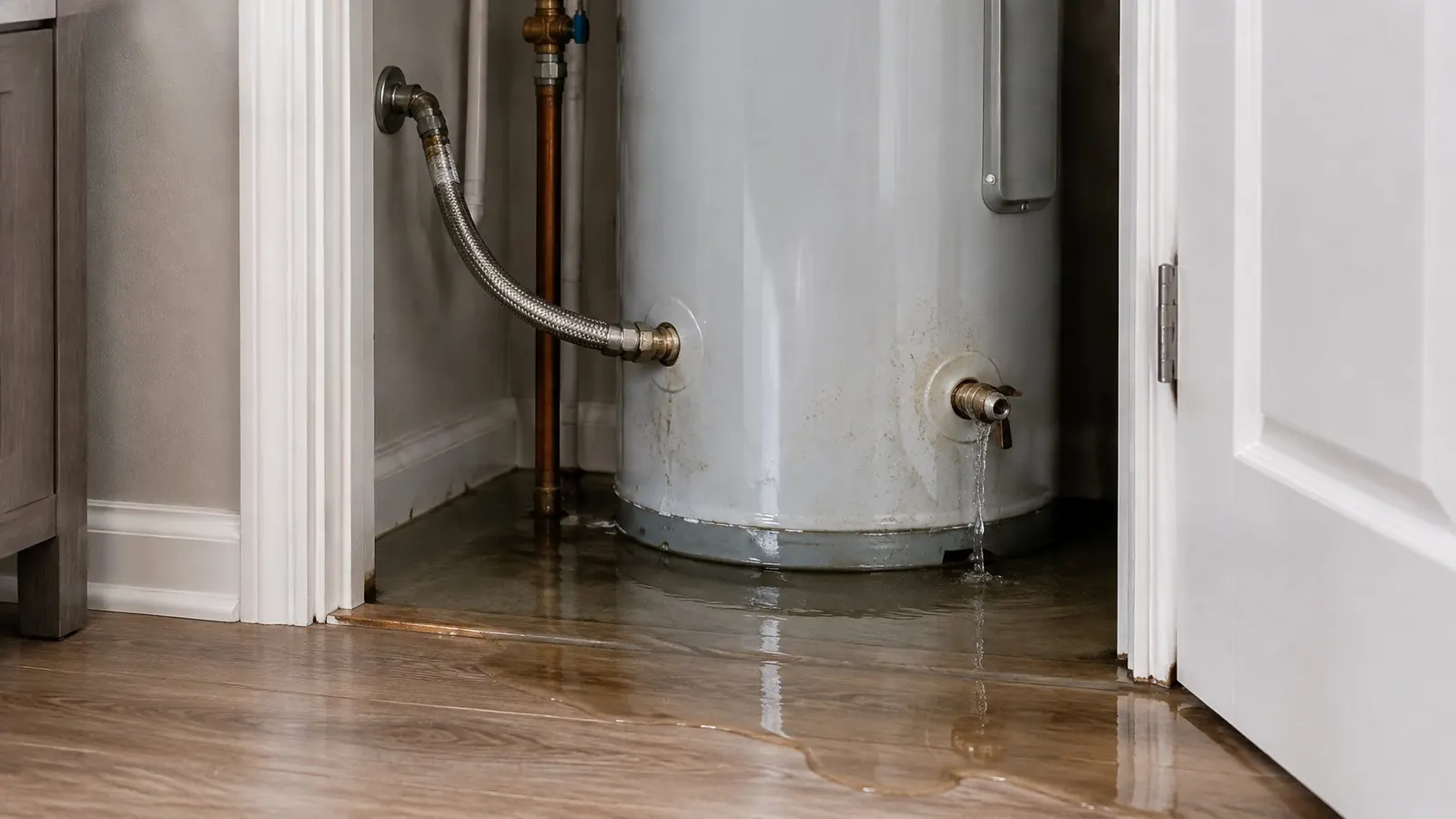
A tank gives out in the basement, a washer hose splits or a dishwasher leaks under the cabinets for weeks. Shut the supply off, then call to reach an independent contractor that dries this kind of damage.
What it involves
Slow leaks and sudden ones
A burst washer hose or a failed water heater tank puts a lot of water on the floor fast, but at least you know about it. Slow leaks are harder: a dishwasher seal, a refrigerator ice-maker line or an AC condensate drain can wet subfloor and cabinets for weeks before anything shows.
Slow leaks matter for insurance as well as for mold. Policies often treat sudden damage differently from gradual leaks, so tell your insurer what you know about the timing.
First steps
Shut it down
- Close the valve behind the appliance or the main shut-off
- For a water heater, turn off its gas or power and close the cold supply
- Unplug the appliance from a dry spot
- Pull out the kick plate or move the appliance only if it is safe
- Look under cabinets and in the ceiling below for spread
- Keep the failed hose or part for the contractor and insurer
The job
Cleaning up an appliance leak
Find the extent
Moisture readings under flooring, in cabinets and in the ceiling below.
Extract
Water is removed from floors and any carpet.
Open up where needed
Toe kicks, cabinet bottoms or floor sections may come out to let air reach wet areas.
Dry
Equipment runs until readings match the dry parts of the house.
Replace
Damaged cabinets, flooring or drywall are replaced, and the appliance repaired by the right trade.
Salt Lake City
Permits for the replacement
Salt Lake City's building permit FAQ says installing or altering plumbing, electrical or heating and cooling systems requires a permit (permit FAQ). Ask whoever replaces a water heater or furnace who is pulling the permit.
The same FAQ explains that urgent emergency work can begin before a permit, but the permit must then be obtained as soon as practical, generally the next day. Permit staff can be reached at 801-535-6000.
Questions
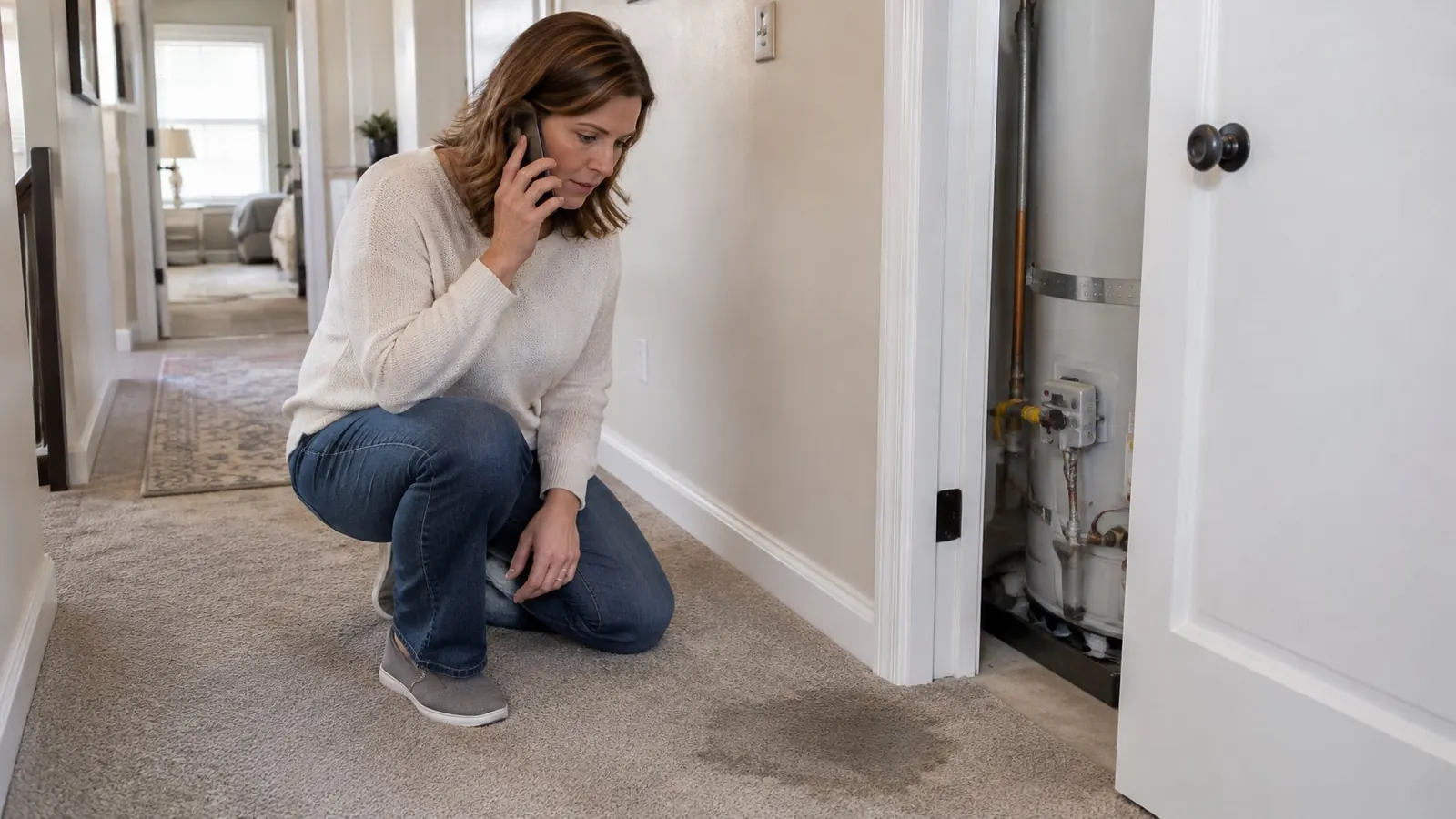
Appliance & Water Heater Leaks: common questions
My water heater leaked. Can I keep using it?
A leak from the tank itself usually means replacement. A leak from a fitting or valve may be repairable. Turn it off and have a plumber look at it.
How do I know if a slow leak caused mold?
A musty smell, warped flooring, swollen cabinet bases or stains are signs. A contractor can take moisture readings and look inside cavities.
Who replaces the damaged cabinets?
Some restoration contractors rebuild; others dry only and hand off. Ask at the start.
Related
Other kinds of damage
- Water Damage RestorationExtraction, drying to measured readings, then the rebuild of whatever had to come out.Read more
- Water Extraction & DryingStanding water out, then air movers and dehumidifiers until the readings say dry.Read more
- Frozen & Burst PipesA split line in a cold wall or crawlspace, often found only when it thaws.Read more
- Flooded Basement CleanupWater across a finished or unfinished basement floor, from inside or outside the house.Read more
- Sewage Backup CleanupWastewater from a floor drain, toilet or tub: treated as contaminated from the start.Read more
- Storm & Roof Leak DamageRain, snowmelt or ice finding a way through the roof, a window well or a door.Read more
- Fire & Smoke DamageSoot, smoke odor and the water used to put the fire out.Read more
- Mold RemediationGrowth after a leak or a damp basement, removed at the source.Read more
Salt Lake Valley
Talk the damage through with a local restoration contractor
A single call reaches an independent contractor that handles water, smoke and mold jobs in Salt Lake City and the surrounding cities. You decide whether to book anything.
Water where it shouldn't be?
The call goes to an independent restoration contractor that takes jobs in the Salt Lake Valley. Describe the source, the rooms involved and when it started.
Call (801) 823-6866Calls may be recorded for quality and billing. How the line is paid: referral disclosure. What is recorded: privacy.