Burst pipes
Frozen and burst pipe water damage
Pipes in exterior walls, crawlspaces and unheated garages are the usual ones to split in a cold snap, and the leak often shows up only after the ice melts. A plumber repairs the pipe; an independent restoration contractor deals with the water.
What it involves
Why the leak appears after the cold
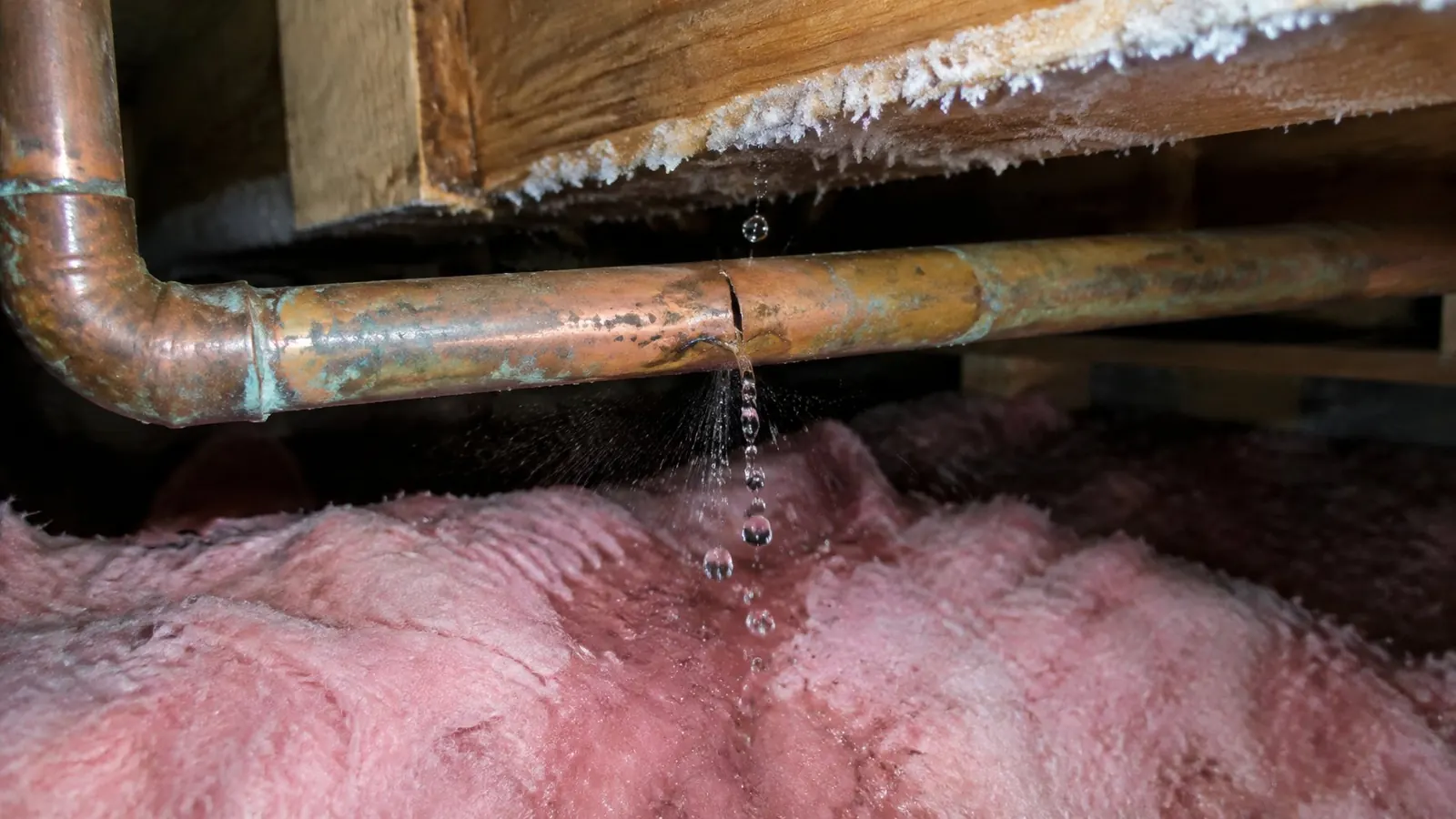
Water expands as it freezes and puts pressure on the pipe between the ice and a closed faucet. The split may stay plugged by ice until the weather warms, then release water inside a wall or ceiling all at once.
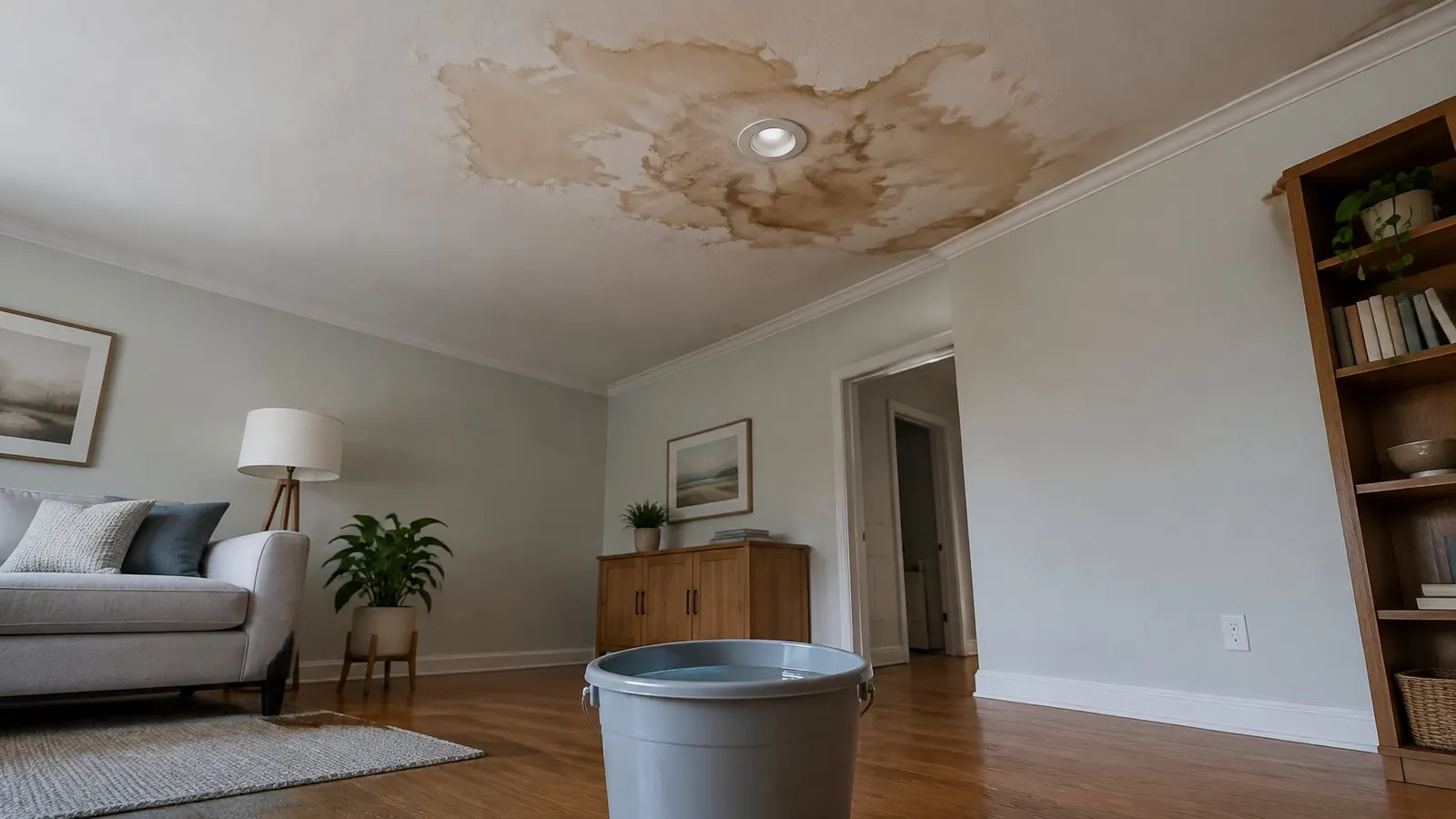
That is why burst pipes are often found late: a stain spreading on a ceiling, a soft spot in the floor, or a drop in water pressure with no tap running.
First steps
If a pipe has burst
- Close the main shut-off valve, usually where the line enters the basement or crawlspace
- Open a low faucet to drain the remaining pressure
- Turn off the water heater if the main is shut for long
- Keep away from sagging ceilings and wet light fixtures
- Call a plumber for the pipe and a restoration contractor for the water
- Photograph the split before it is cut out
The job
From the burst to a dry wall
Pipe repaired
A plumber replaces the split section; water can't stay off for long, so this usually comes first.
Water removed
Standing water is extracted and soaked insulation or ceiling board is taken out.
Cavities opened
Walls and ceilings around the line may be opened so they can dry from inside.
Drying
Equipment runs until framing and drywall read dry.
Closing up
Insulation goes back, ideally better than before, and the wall is repaired.
Salt Lake City
Which pipe is yours
Salt Lake City Public Utilities' homeowner responsibility graphic shows that, for a typical home service line, the city is responsible from the water main to the meter and the homeowner for everything after the meter to the house. A break inside the house or in the yard past the meter is a plumber's job, not the city's.
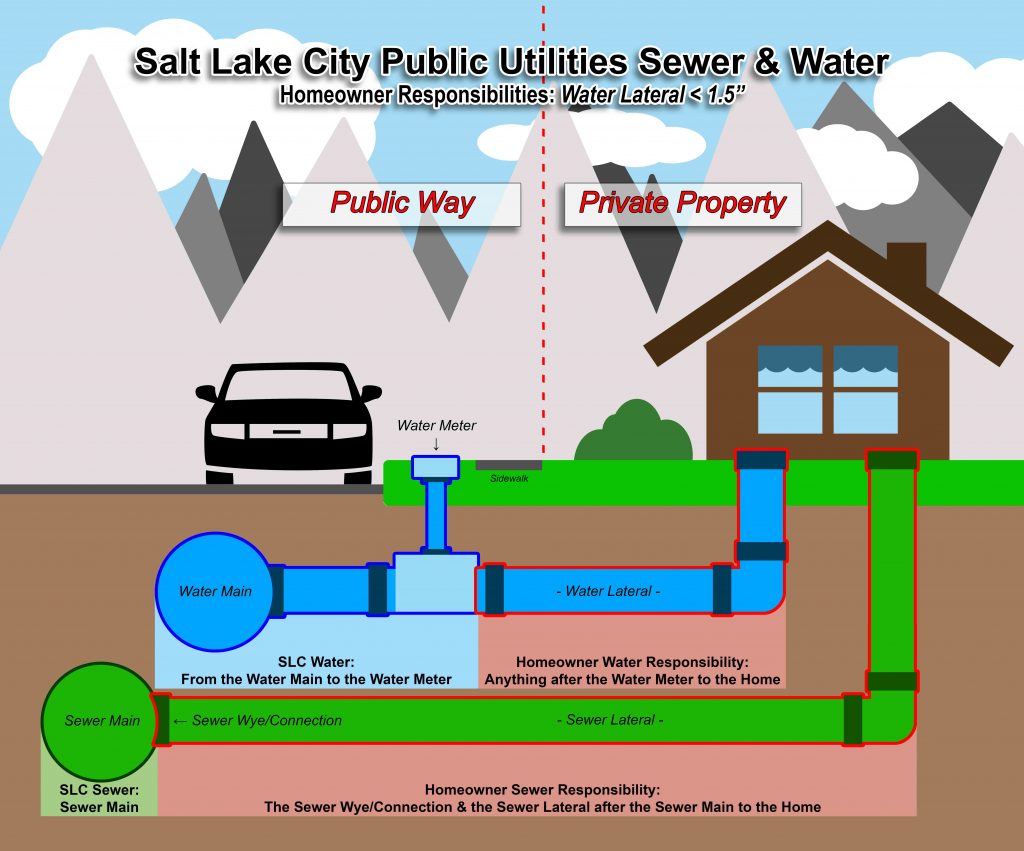
If water is coming up in the street or the park strip, report it to the Public Utilities 24-hour dispatch line, 801-483-6700 (city contact page). More on this on the pipes and sewer page.
Questions
Frozen & Burst Pipes: common questions
Should I try to thaw a frozen pipe myself?
Gentle warmth from a hair dryer or space heater kept well away from anything flammable is the usual advice. Never use an open flame. If you can't find the frozen section, or it has already split, call a plumber.
Is a burst pipe covered by insurance?
The Utah Insurance Department notes that frozen pipe damage may not be covered when it results from negligence, such as not keeping enough heat in the home. Your own policy decides; ask your insurer.
Does replacing the split pipe need a permit?
Salt Lake City's building permit FAQ says installing or altering plumbing systems requires a permit. Emergency work can start first, with the permit obtained as soon as practical. Your plumber should know the rules.
Related
Other kinds of damage
- Water Damage RestorationExtraction, drying to measured readings, then the rebuild of whatever had to come out.Read more
- Water Extraction & DryingStanding water out, then air movers and dehumidifiers until the readings say dry.Read more
- Flooded Basement CleanupWater across a finished or unfinished basement floor, from inside or outside the house.Read more
- Sewage Backup CleanupWastewater from a floor drain, toilet or tub: treated as contaminated from the start.Read more
- Storm & Roof Leak DamageRain, snowmelt or ice finding a way through the roof, a window well or a door.Read more
- Appliance & Water Heater LeaksWater heaters, washer hoses, dishwashers, ice makers and AC drain lines.Read more
- Fire & Smoke DamageSoot, smoke odor and the water used to put the fire out.Read more
- Mold RemediationGrowth after a leak or a damp basement, removed at the source.Read more
Salt Lake Valley
Talk the damage through with a local restoration contractor
A single call reaches an independent contractor that handles water, smoke and mold jobs in Salt Lake City and the surrounding cities. You decide whether to book anything.
Water where it shouldn't be?
The call goes to an independent restoration contractor that takes jobs in the Salt Lake Valley. Describe the source, the rooms involved and when it started.
Call (801) 823-6866Calls may be recorded for quality and billing. How the line is paid: referral disclosure. What is recorded: privacy.