Storms and roofs
Storm, runoff and roof leak water damage
A summer cloudburst, a fast spring melt or a leak that showed up as a ceiling stain. An independent restoration contractor dries the inside; a roofer or other trade fixes the way in.
What it involves
Two problems: the opening and the water
Storm damage usually needs two trades. The roof, window or door that let water in has to be closed, at least temporarily, and the wet materials inside have to be dried or removed. Drying a room while the roof is still open just means doing it twice.
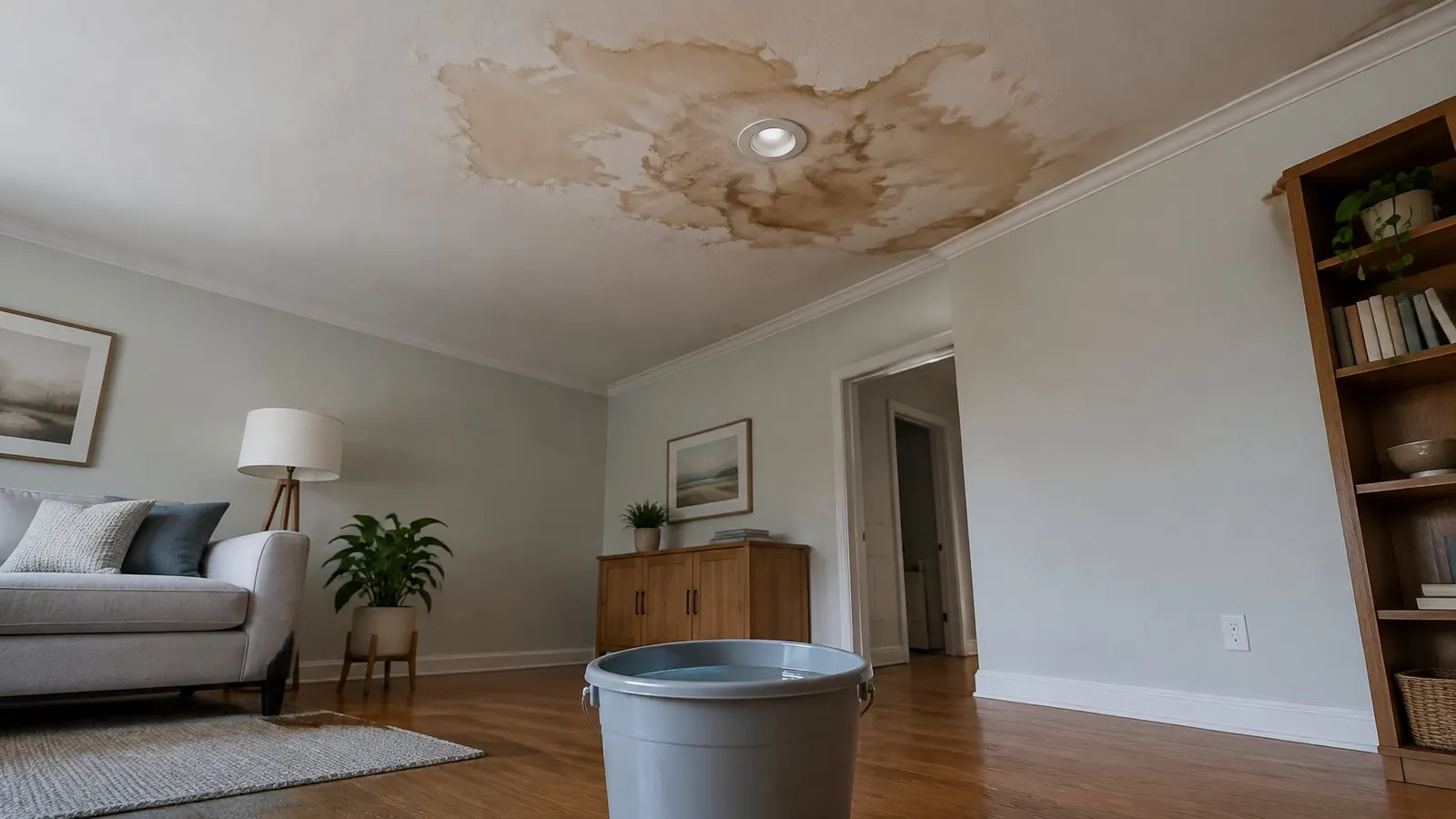
Ceiling leaks spread further than the stain. Water runs along joists and pools on top of drywall and insulation, so a contractor will often check the ceiling from above or open it to see how far the water went.
First steps
During and right after the storm
- Catch drips and move what you can out of the way
- Stay clear of a ceiling that bulges or sags
- Turn off lights and fans in a ceiling that is dripping
- Cover an opening with a tarp only if it is safe to reach
- Clear snow and debris from gutters and drains when weather allows
- Photograph the outside damage as well as the inside
The job
After a storm leak
Temporary cover
The opening is tarped or boarded so no more water gets in.
Inspection
Ceilings, walls and attic insulation are checked to see where water travelled.
Removal
Soaked insulation and ceiling board that can't be saved come out.
Drying
Equipment runs below and sometimes above the ceiling.
Permanent repairs
The roof or window is repaired, then the interior finishes.
Salt Lake City
What Salt Lake City asks residents to watch
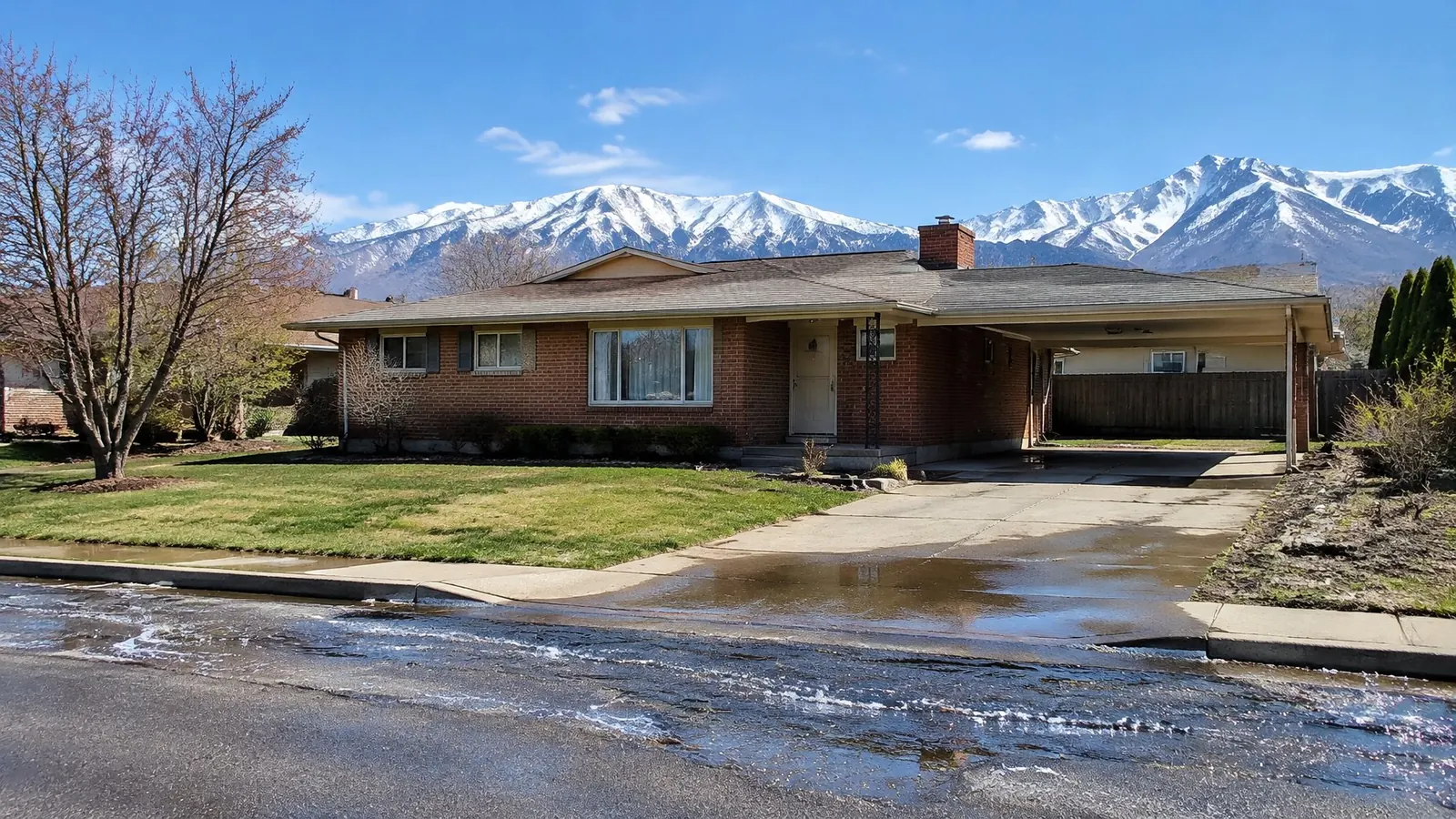
The city's flooding and spring runoff page advises checking that gutters, downspouts and nearby storm drains are clear of snow and debris before heavy rain and making sure water drains away from the house. It also warns that flash floods can come with no warning (city page).
In April 2023, snowmelt in Emigration Creek overflowed into Wasatch Hollow Park and nearby streets, and hundreds of volunteers filled sandbags that night (2023 flooding events). Salt Lake County lists self-serve sandbag locations for residents.
Questions
Storm & Roof Leak Damage: common questions
Does homeowners insurance cover storm leaks?
The Utah Insurance Department lists wind and wind-driven rain among perils covered under most standard policies, but not interior water damage from a storm when the roof or walls weren't damaged. Read your own policy.
Who should I call first, roofer or restoration contractor?
If water is still coming in, the opening needs covering first. Many restoration contractors can tarp a roof temporarily; the permanent repair is a roofer's job.
Is runoff through a window well a flood?
Policies define flood their own way. Utah's insurance regulator notes that flood damage is generally not covered by a standard homeowners policy. Ask your insurer how they classify water from outside.
Related
Other kinds of damage
- Water Damage RestorationExtraction, drying to measured readings, then the rebuild of whatever had to come out.Read more
- Water Extraction & DryingStanding water out, then air movers and dehumidifiers until the readings say dry.Read more
- Frozen & Burst PipesA split line in a cold wall or crawlspace, often found only when it thaws.Read more
- Flooded Basement CleanupWater across a finished or unfinished basement floor, from inside or outside the house.Read more
- Sewage Backup CleanupWastewater from a floor drain, toilet or tub: treated as contaminated from the start.Read more
- Appliance & Water Heater LeaksWater heaters, washer hoses, dishwashers, ice makers and AC drain lines.Read more
- Fire & Smoke DamageSoot, smoke odor and the water used to put the fire out.Read more
- Mold RemediationGrowth after a leak or a damp basement, removed at the source.Read more
Salt Lake Valley
Talk the damage through with a local restoration contractor
A single call reaches an independent contractor that handles water, smoke and mold jobs in Salt Lake City and the surrounding cities. You decide whether to book anything.
Water where it shouldn't be?
The call goes to an independent restoration contractor that takes jobs in the Salt Lake Valley. Describe the source, the rooms involved and when it started.
Call (801) 823-6866Calls may be recorded for quality and billing. How the line is paid: referral disclosure. What is recorded: privacy.