Restoration
Water damage restoration for Salt Lake City homes
Supply line, water heater, toilet overflow or a leak you found too late: whatever the source, restoration follows the same order. Call and you reach an independent contractor working in the valley.
What it involves
The three stages of a restoration job
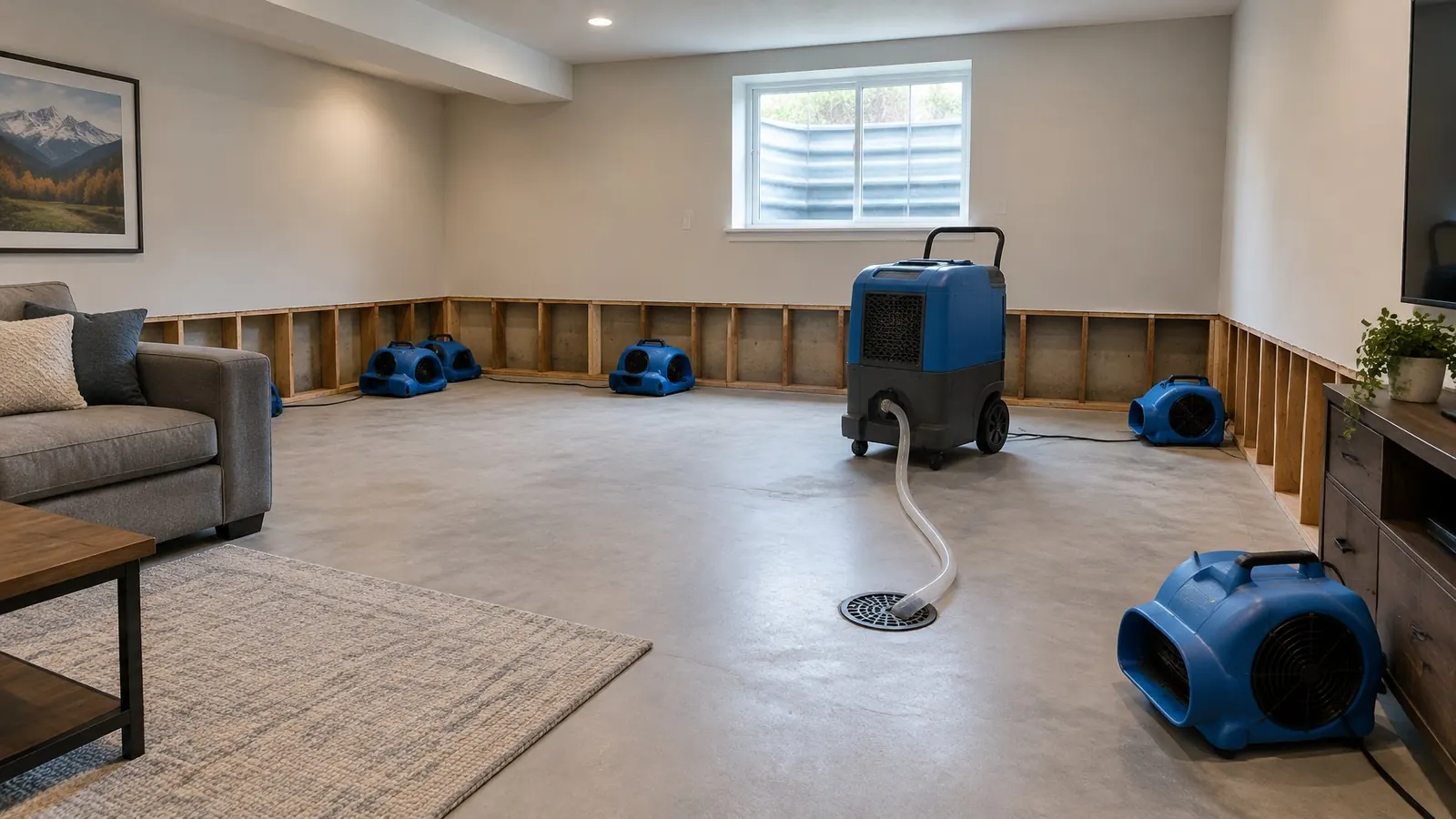
Restoration starts with getting the water out: pumps or truck-mounted extraction for standing water, then wands over carpet. After that comes drying, which is most of the job. Air movers push air across damp surfaces and dehumidifiers take the moisture out of the room until materials test dry.
Only then does repair begin. Drywall, baseboard, pad and sometimes flooring are replaced, and the room is put back the way it was. Some companies do all three stages, others hand the rebuild to a separate contractor. Ask which kind you are talking to.
First steps
While you wait for the contractor
- Shut the water off at the fixture valve or the main
- Switch off breakers for wet rooms only if you can reach the panel from a dry floor
- Lift rugs, cushions and boxes onto something dry
- Wipe furniture legs and slip foil or plastic under them
- Take photos and a short video before anything is moved
- Leave walls closed until someone has measured the moisture
The job
How the visit usually unfolds
Inspection and readings
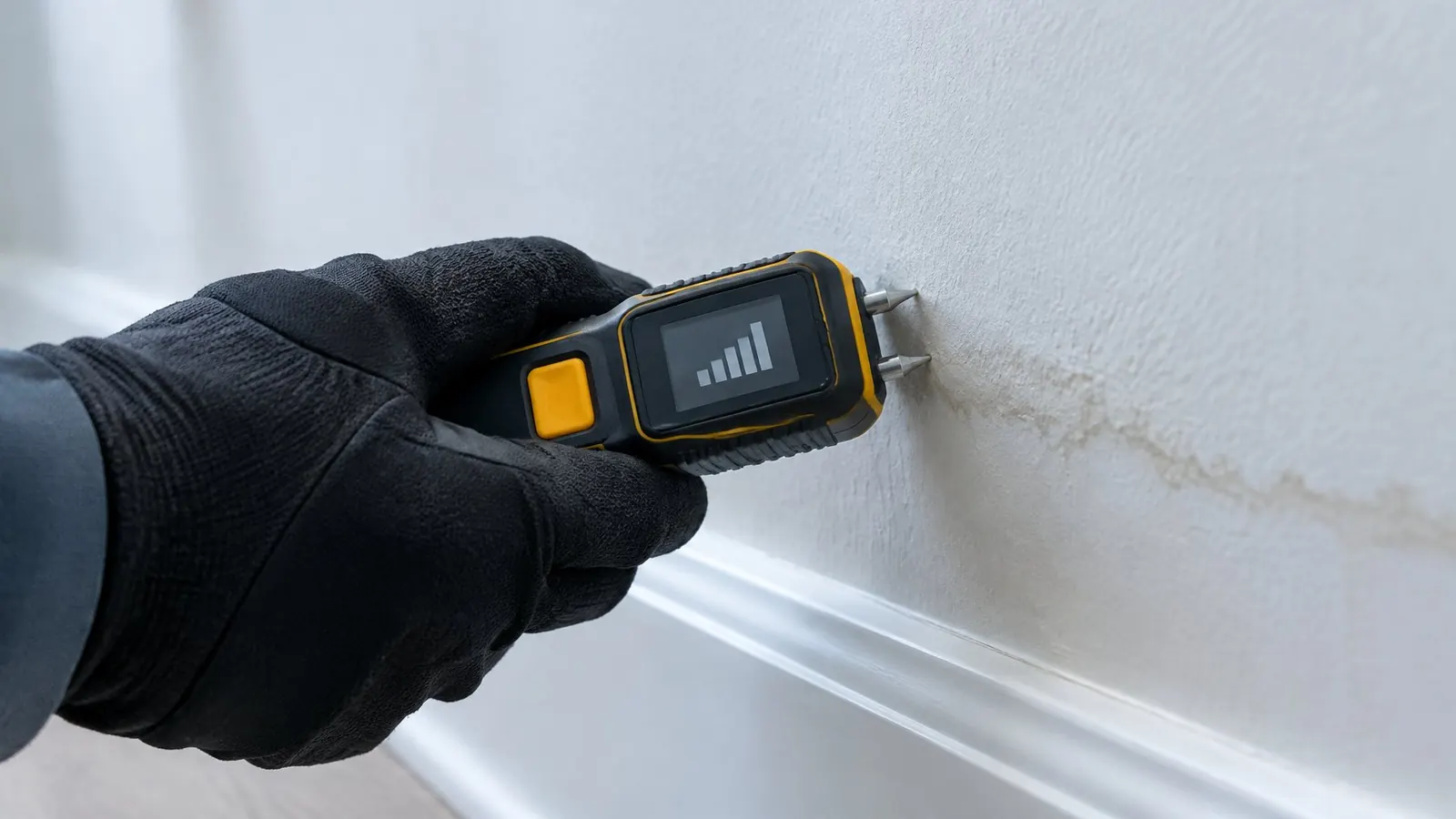
The contractor traces the water, maps wet areas with a moisture meter and photographs the starting point.
Water removal
Standing water is extracted. Soaked pad and materials that can't be dried are taken out.
Drying setup
Air movers and dehumidifiers are placed, sometimes with wall cavities opened at the base.
Daily checks
Readings are logged each visit and equipment is moved or removed as areas dry.
Repairs
Once the log shows dry materials, replacement and finishing work can be scheduled.
Salt Lake City
Basements change the job in Salt Lake City
Many houses in the city have finished basements, and water heaters and washers often sit down there too. A failed tank or hose in a basement soaks carpet pad and the bottom of drywall quickly, and the room has fewer windows for air exchange, so drying leans heavily on dehumidifiers.
Utah's dry air helps once the source is fixed, but it does not dry what is trapped inside walls or under flooring. That is why the readings matter more than how a room looks. The first 48 hours guide covers what to do before the contractor arrives.
Questions
Water Damage Restoration: common questions
How long does structural drying take?
Often three to five days for clean water caught early. Hardwood floors, plaster, thick carpet pad or water that sat for days take longer. The moisture log decides when equipment comes out, not the calendar.
Do I have to leave the house?
Usually not for clean-water jobs. The equipment is loud and runs constantly, so some families move out of the affected rooms. Sewage or heavy mold may be different; ask the contractor.
Will the contractor talk to my insurer?
Many restoration companies are used to documenting jobs for insurance. This site does not handle claims and cannot say what your policy covers. See the Utah insurance basics page.
Related
Other kinds of damage
- Water Extraction & DryingStanding water out, then air movers and dehumidifiers until the readings say dry.Read more
- Frozen & Burst PipesA split line in a cold wall or crawlspace, often found only when it thaws.Read more
- Flooded Basement CleanupWater across a finished or unfinished basement floor, from inside or outside the house.Read more
- Sewage Backup CleanupWastewater from a floor drain, toilet or tub: treated as contaminated from the start.Read more
- Storm & Roof Leak DamageRain, snowmelt or ice finding a way through the roof, a window well or a door.Read more
- Appliance & Water Heater LeaksWater heaters, washer hoses, dishwashers, ice makers and AC drain lines.Read more
- Fire & Smoke DamageSoot, smoke odor and the water used to put the fire out.Read more
- Mold RemediationGrowth after a leak or a damp basement, removed at the source.Read more
Salt Lake Valley
Talk the damage through with a local restoration contractor
A single call reaches an independent contractor that handles water, smoke and mold jobs in Salt Lake City and the surrounding cities. You decide whether to book anything.
Water where it shouldn't be?
The call goes to an independent restoration contractor that takes jobs in the Salt Lake Valley. Describe the source, the rooms involved and when it started.
Call (801) 823-6866Calls may be recorded for quality and billing. How the line is paid: referral disclosure. What is recorded: privacy.